Last year planned a trip with a group of friends to celebrate my 40th birthday. Having a January birthday, I decided to lean into the winter weather theme. If we’re being honest, I grew up in the Southeast, so snow is always exciting to me.
During my research, these were my priorities:
- Real terrain for every level
- Reasonable costs for hotel, gear rental, and lift passes
- Snowboarders and skiers allowed
- Good food on the mountain and in town
- Easy access to public transit
The big names kept failing on at least one count. Some blew the budget while others were logistically difficult if you didn’t rent a car. The place that checked every box was one I’d barely heard mentioned in my research: Garmisch-Partenkirchen, a Bavarian town at the foot of the Zugspitze. I only knew about it because a friend lived there several years ago.
The town hosted the 1936 Winter Olympics and still runs a World Cup downhill, yet most American skiers fly right past it on the way to Austria or Switzerland.
Here’s why it deserves a spot on your list:
Getting around: no car needed
Getting there
Flying into Munich is going to be your best bet. Take the S-Bahn into the city and spend a day enjoying Munich. The next morning, take a direct regional train from Munich Hauptbahnhof to Garmisch-Partenkirchen. This takes a little over an hour, with several direct departures a day.
Getting around town
Once you arrive, the local bus system makes a car completely unnecessary. The town is also extremely walkable. Buses run from the train station and through both Garmisch and Partenkirchen to the lift bases, including the Hausberg, Kreuzeck and Wank cable cars, and the Eibsee bus takes you to the Zugspitze cable car.
Each morning we walked to the Ski Schule Sprenzel to pick up our equipment and check in for our ski lesson. From there we took the bus to the Garmisch Classic.
Our hotel gave us a bus pass as part of our stay. Many hotels in the area include a guest card that covers the local buses, and since January 2026 the region has been part of Munich’s MVV transit network, so guest cards can also cover regional trains in the area. Ask about it when you book, because it can save you a surprising amount over a week.
Skiing and Snowboarding for every level
Garmisch has two separate ski areas. Garmisch-Classic spreads 40 km of runs across three mountains: Hausberg (1,310 m), Kreuzeck (1,651 m) and Alpspitze (2,628 m) . The Zugspitze glacier above it is roughly half the size but has Germany’s highest pistes and a season that can run into May.
Beginners
- Hausberg Kinderland: We spent most of our time here. There are gentle practice slopes, magic carpets, and ski schools right at the base. A Kinderland-only ticket costs €43 for adults, so you don’t pay full price while learning.
- Zugspitze glacier: once you can link turns, the wide, mellow blues on the Zugspitzplatt plateau are a confidence builder, with near-guaranteed snow and huge views.
- Eckbauer: a quiet, low-key hill above Partenkirchen that’s good for nervous first-timers.
Intermediates
- Kreuzeck: wide, rolling blues and reds that are ideal for working on technique.
- Osterfelderkopf (via the Alpspitzbahn): longer reds with big Alpine scenery, plus a lunch stop at Osterfelder 2000.
- The Hausberg valley run: a red that winds through woods back to town, a classic end-of-day cruise.
- Zugspitze’s Wetterwandeck and Schneefernerkopf: high-altitude reds when the lower mountain is soft.
Advanced
- The Kandahar: the World Cup downhill course, about 7 km long, with the infamous “Freier Fall” section hitting a steep gradient. This is not for me but it may be fun if you’re actually skilled at winter sports.
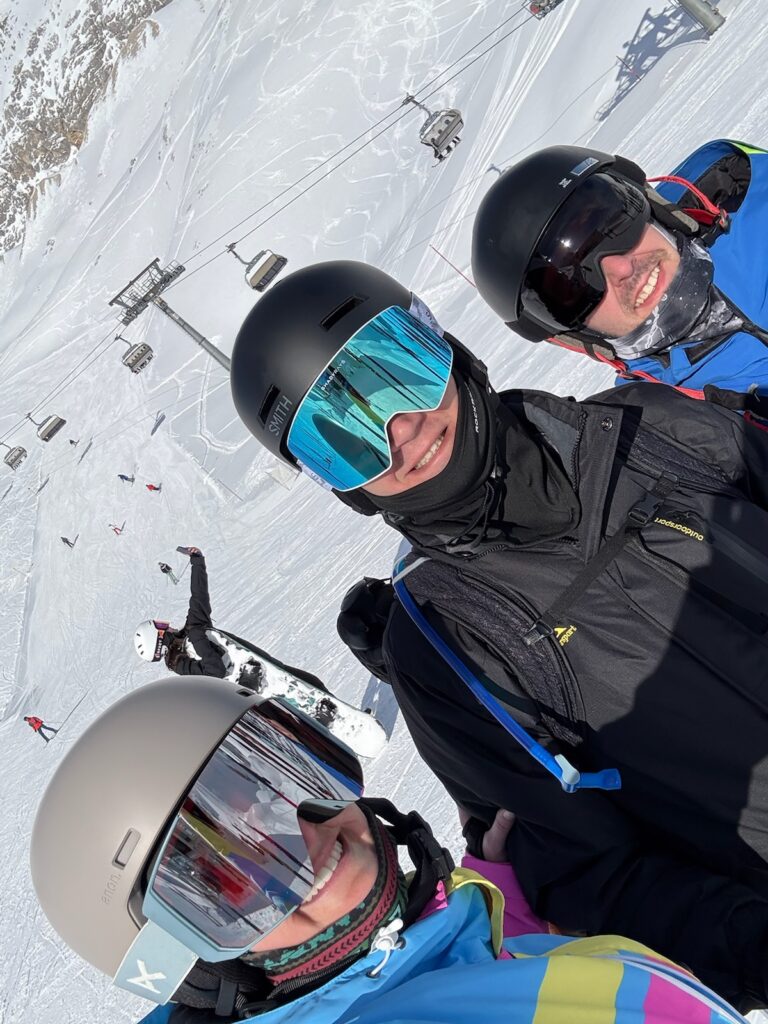
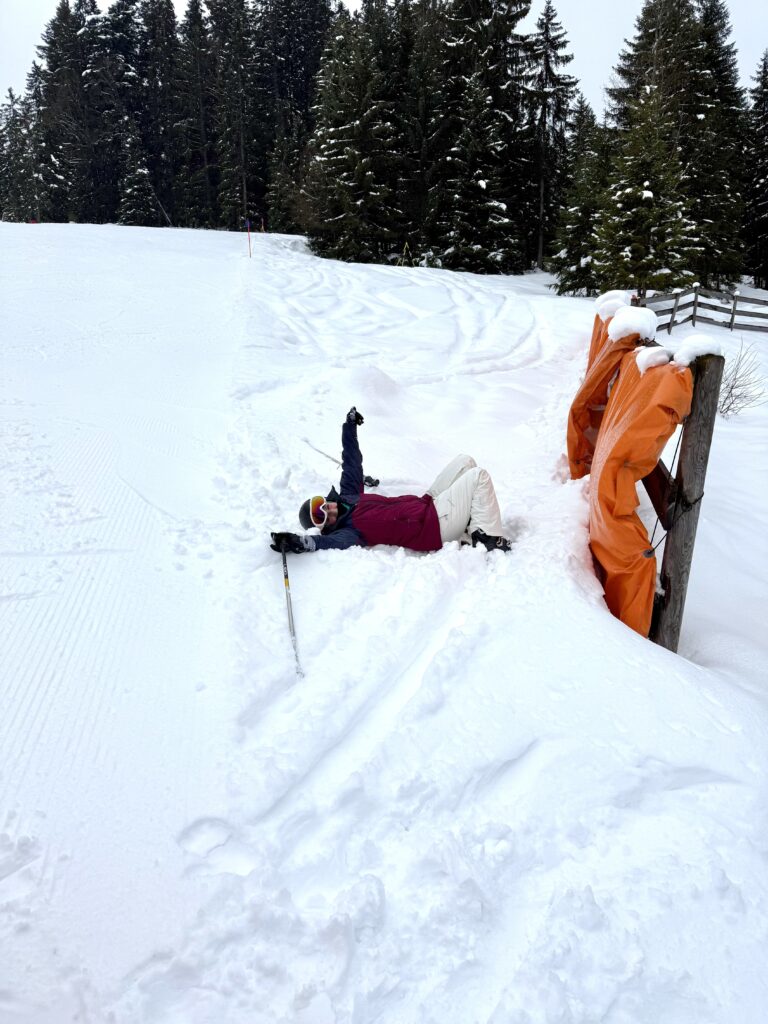
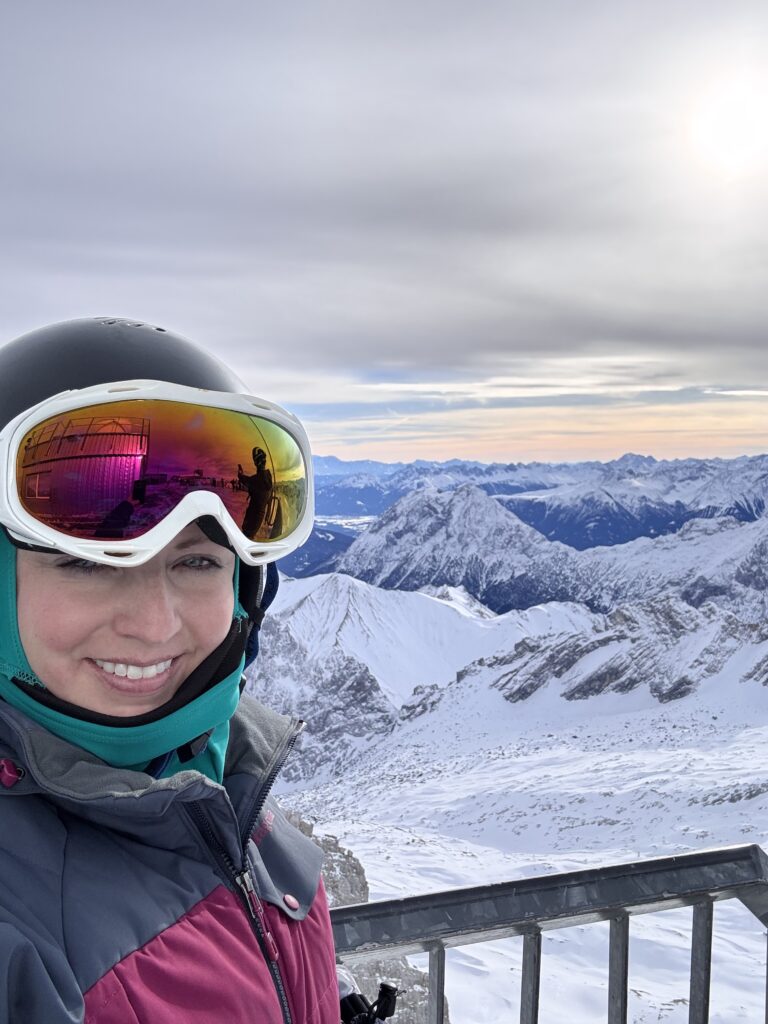
Affordability: a fraction of US prices, and cheaper than the Alpine big names
An adult day pass at Garmisch-Classic costs €69 online for 2026/27, about a fifth of a peak-day ticket at Vail. It also undercuts the famous Austrian and Swiss resorts.
| Resort | Adult day pass (peak) | Season |
|---|---|---|
| Garmisch-Classic | €69 online / €72 at the window (zugspitze.de) | 2026/27 |
| Zugspitze glacier (incl. cog railway or cable car) | €70.50 online / €78 at the window (zugspitze.de) | 2026/27 |
| St. Anton am Arlberg, Austria | €81.50 (bergfex) | 2025/26 |
| Zermatt, Switzerland | €106+ (ADAC via Snow Industry News) | 2025/26 |
| Park City, Utah | $351 (SnowBrains) | 2025/26 |
| Vail, Colorado | $356 (SnowBrains) | 2025/26 |
The rest of the trip follows the same pattern:
- Lift pass savings: a two-day Twin-Ticket covers both areas, kids under 6 ski free with a parent, and morning or afternoon half-day passes run €55.50 (zugspitze.de). Buying online the day before saves a few euros per ticket.
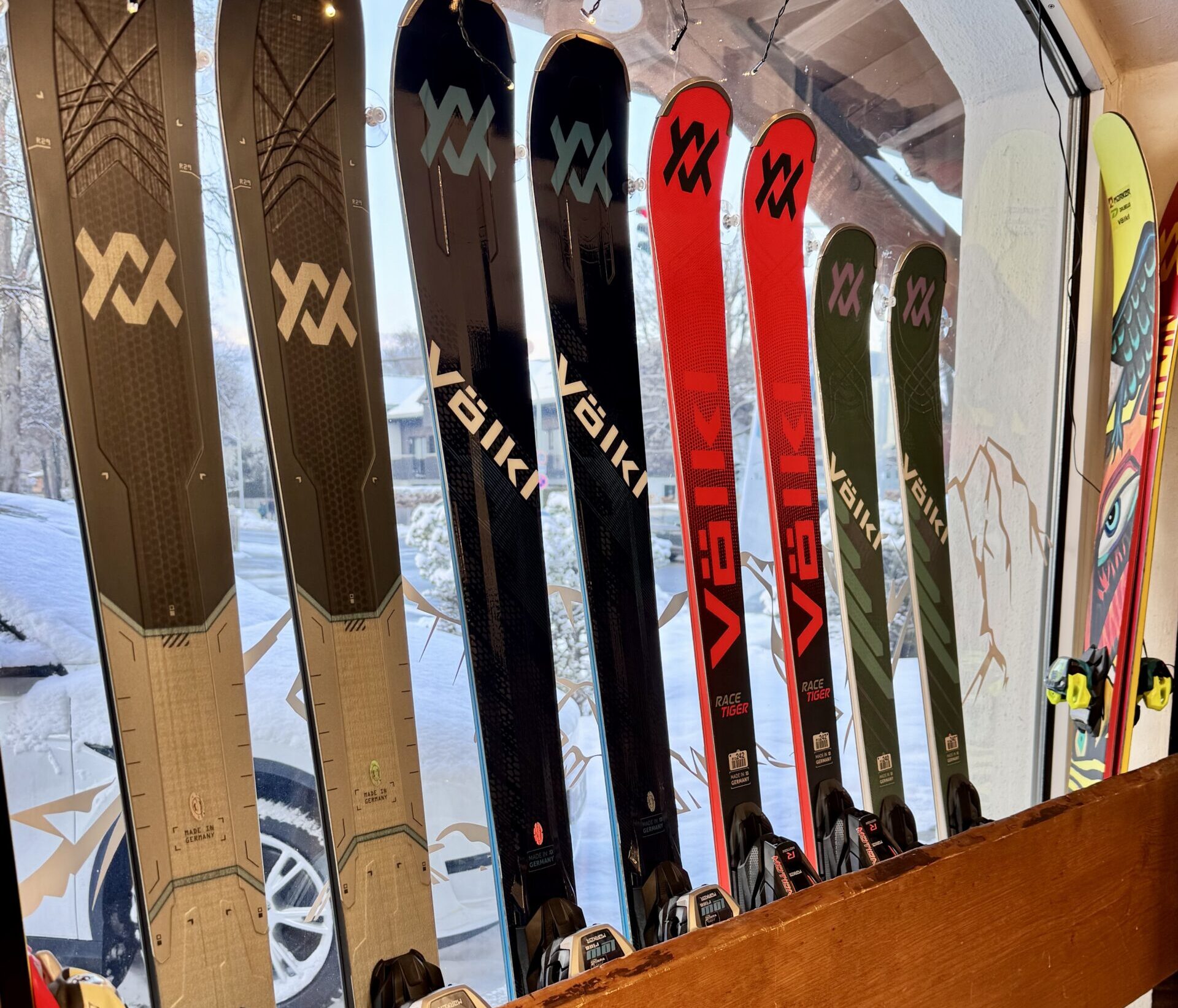
- Rentals: we went through Ski Schule Sprenzel. We paid about €200 for 5 days of equipment rental.
- Ski school: adult group lessons start around €60 for a half-day course. We went through Ski Schule Sprenzel. Our instructor was very knowledgeable and helpful!
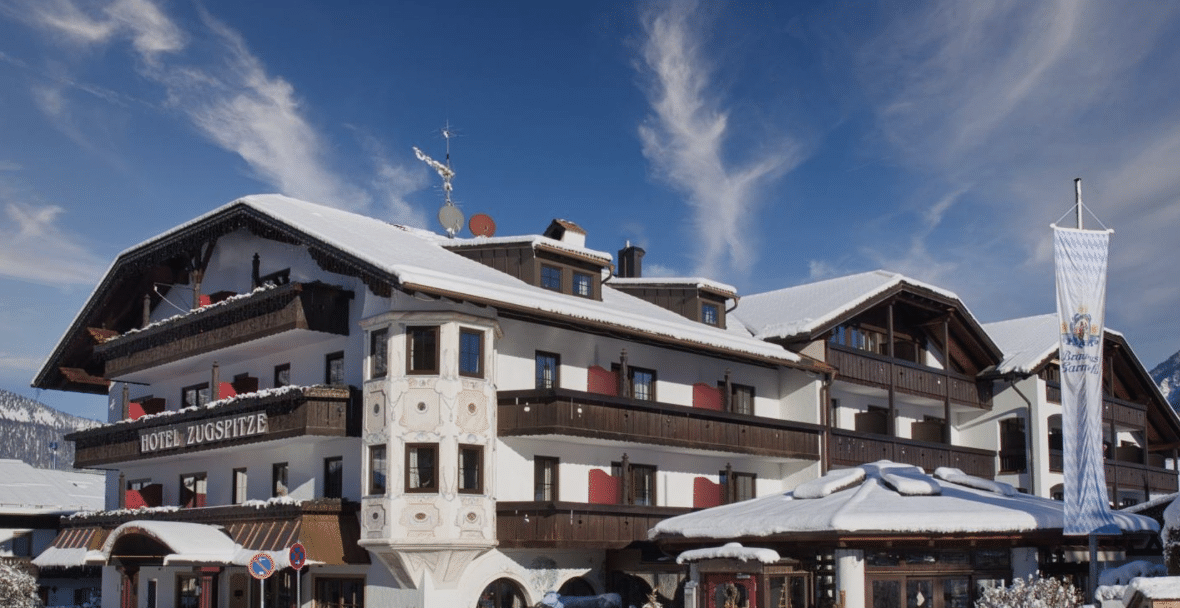
- Hotels: budget rooms start around €92 a night, and because Garmisch is a real town rather than a purpose-built resort, there’s a wide range of family-run guesthouses and pensions. We LOVE Hotel Zugspitze.
Garmisch has far less terrain than St. Anton or Zermatt, so it’s not a like-for-like swap. But for our group, it was perfect.
The food scene: hearty Bavarian classics and a curry
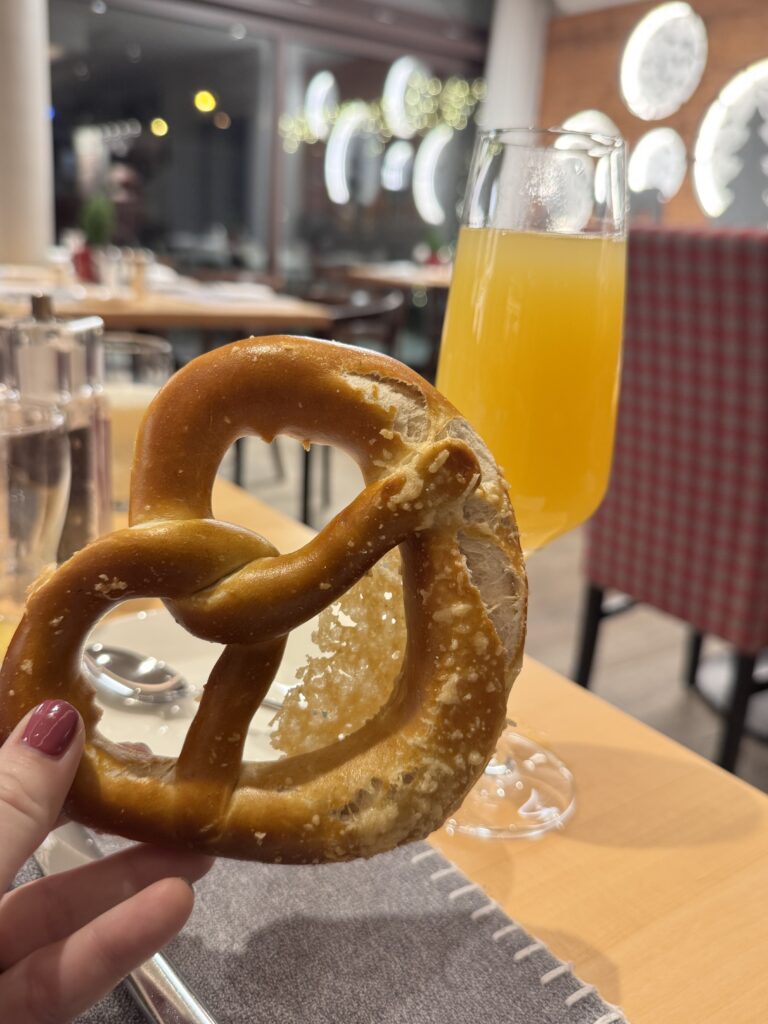
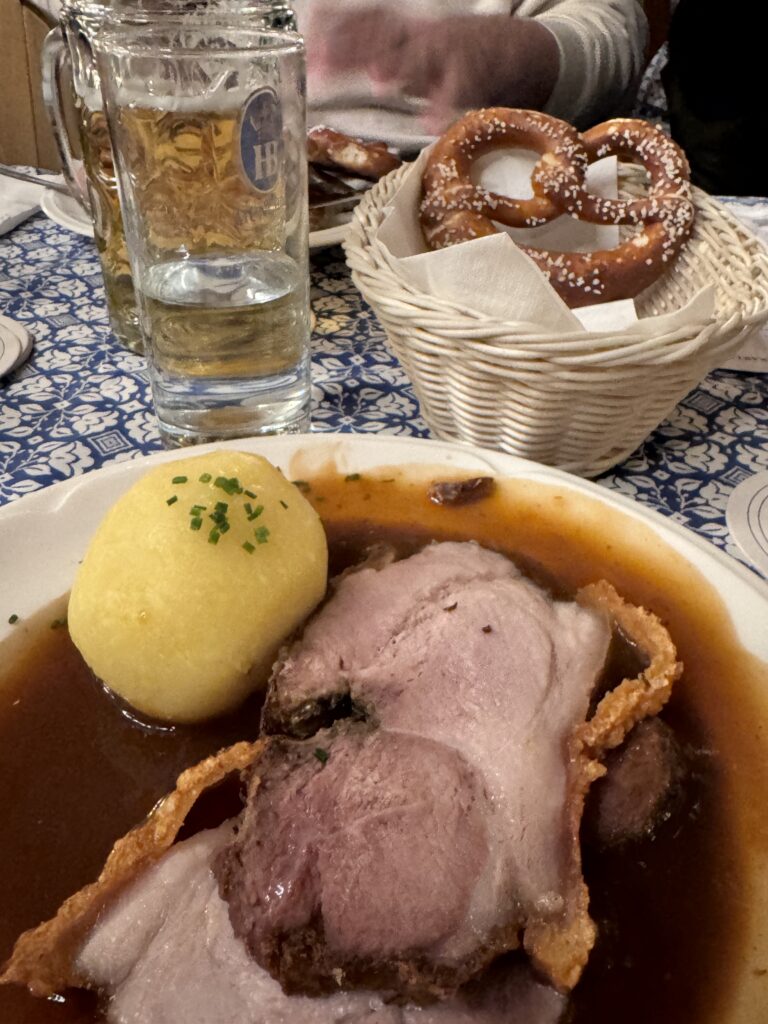
After a day on the slopes, you want pork knuckle, Käsespätzle, and a liter of local beer. Garmisch delivers that in its old taverns along with a few new surprises.
Bavarian
Saffron
Saffron Indische Spezialitäten is the town’s go-to Indian restaurant and was one of our favorite spots!
On the mountain
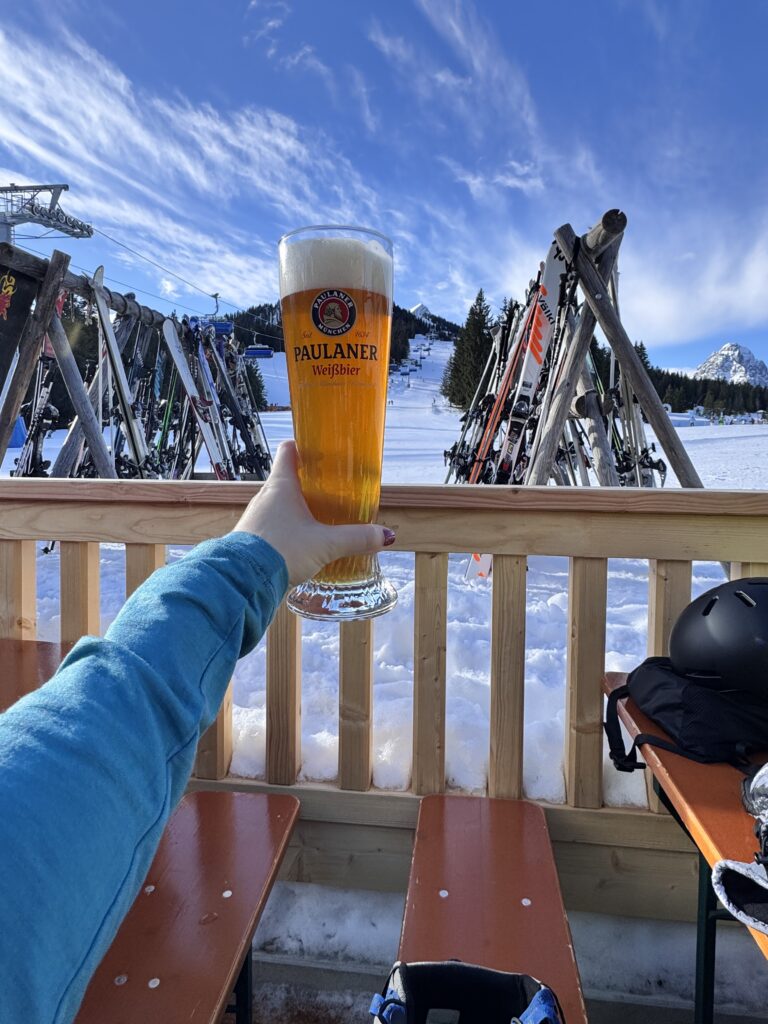
The lift company runs sun-deck huts across the ski area, including Drehmöser 9 and Garmischer Haus on the Hausberg. Drehmöser 9 was our absolute favorite on the mountain!
Beyond the slopes
Garmisch is a real town with Olympic history, so rest days are easy to fill. Here are my recommendations for non-ski days.
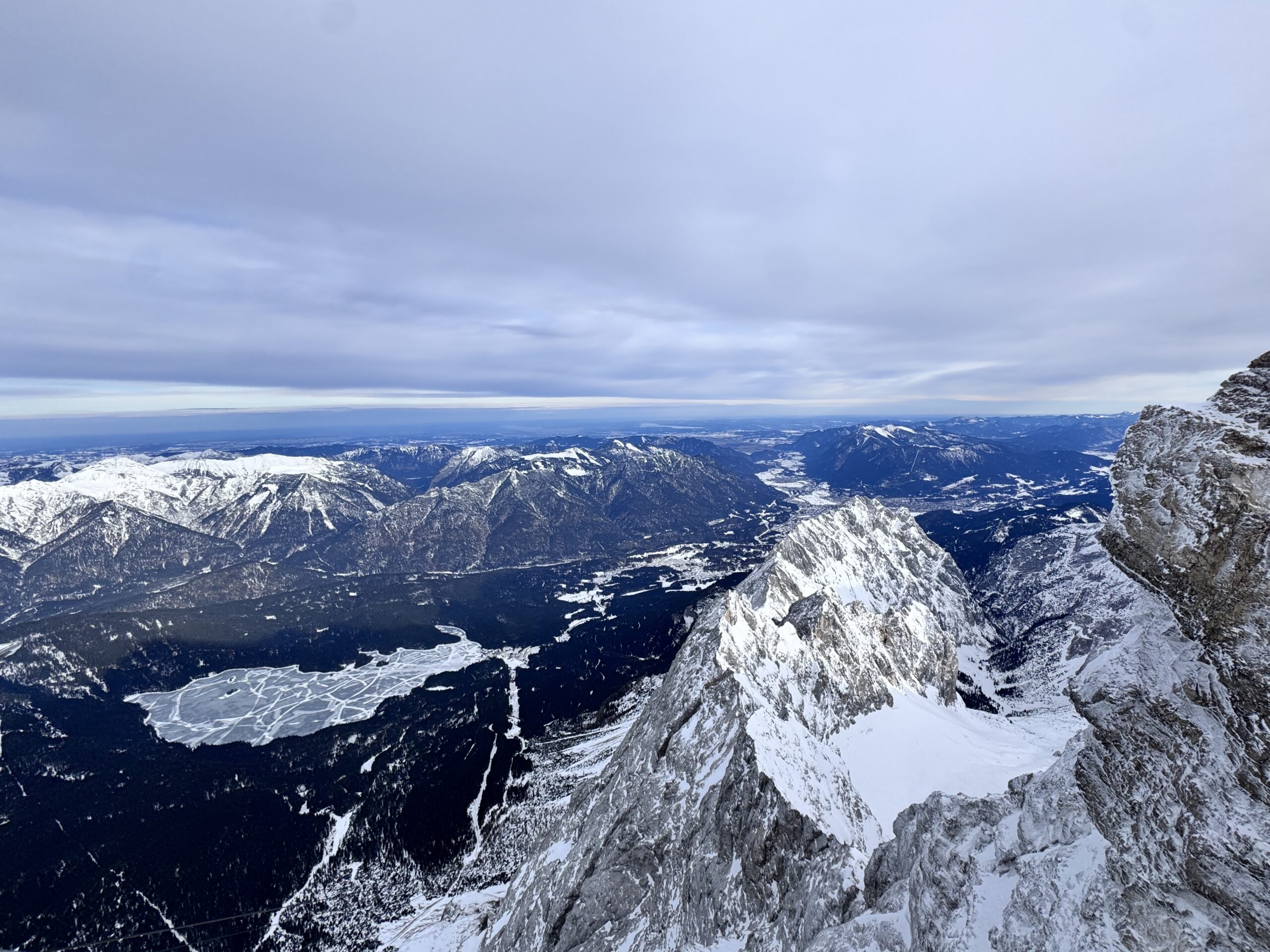
- Zugspitze summit: even non-skiers should ride to the top of Germany at 2,962 m for views across four countries.
- Partnach Gorge: a short walk from the Olympic ski stadium, it turns into a corridor of frozen waterfalls and icicles in winter.
- Big events: the New Year’s Day ski jump at the Olympic stadium is part of the Four Hills Tournament, and the men’s World Cup downhill on the Kandahar usually lands in late winter.
- Two towns in one: stroll the painted houses of Ludwigstraße in old Partenkirchen, then the shops and cafés of Garmisch.
- Day trips by train or bus: Neuschwanstein Castle (open seasonally), Innsbruck, the violin-making village of Mittenwald, or the Austrian Tiroler Zugspitz Arena, which is included on regional multi-day passes.
Know before you go
- Snow can be thin down low. The town sits at about 700 m, so the valley runs depend on the season. The Zugspitze glacier is your backup, with snow from late autumn into spring.
- It’s not ski-in/ski-out. Expect a short bus ride or walk to the lifts.
- Avoid weekends and holidays if you can. Munich day-trippers fill the lifts on sunny Saturdays, and some tickets sell out. Buy online two to three days ahead.
- The 2026/27 season starts with new prices on November 27, 2026; online sales open in mid-November.
Garmisch-Partenkirchen won’t overwhelm you with terrain and crazy parties the way the mega-resorts do. Garmisch offers instead the full Alpine experience in a laid back town, at a price that makes a week in the Alps feel doable, all a 90-minute train ride from Munich.
Sources
- zugspitze.de: Winter 2026/27 tickets & rates
- zugspitze.de: Garmisch-Classic ski area
- zugspitze.de: Getting here
- Trainline: Munich Hbf to Garmisch-Partenkirchen
- Tiroler Zugspitz Arena: Public transport
- Sno: Garmisch-Partenkirchen
- Maison Sport: Guide to skiing in Garmisch
- WeSki: Garmisch-Partenkirchen guide
- AAA: Garmisch-Classic ski area
- Snowthere: Family ski guide
- CheckYeti: Adult ski lessons
- Kidvoyage: Skischule Zugspitze-Grainau
- bergfex: St. Anton prices
- Snow Industry News: ADAC price comparison
- SnowBrains: Vail Resorts peak prices
- Frommer’s: Garmisch restaurants
- Lonely Planet: Garmisch restaurants
- Benable: The best of Garmisch from a local
- OpenTable: Bavarian restaurants in Garmisch
- OrangeSmile: Garmisch cuisine
- schneehoehen.de: Zugspitze prices